

Knee Cartilage
Demo Author One
Cartilage repair options for lasting joint health
A practical overview of cartilage repair, injection therapy, rehabilitation planning, and the clinical evidence that guides joint preservation care.

Guide price only. Final cost is confirmed after assessment.
Private hip replacement surgery led by Professor Paul Lee at London Cartilage Clinic, with the operation performed at the 5-star Weymouth Street Hospital in central London. Patient-specific planning and muscle and tendon-sparing surgical technique where clinically appropriate. Every patient is first assessed for biological and joint-preserving alternatives, because replacement should be the right decision, not the default one.
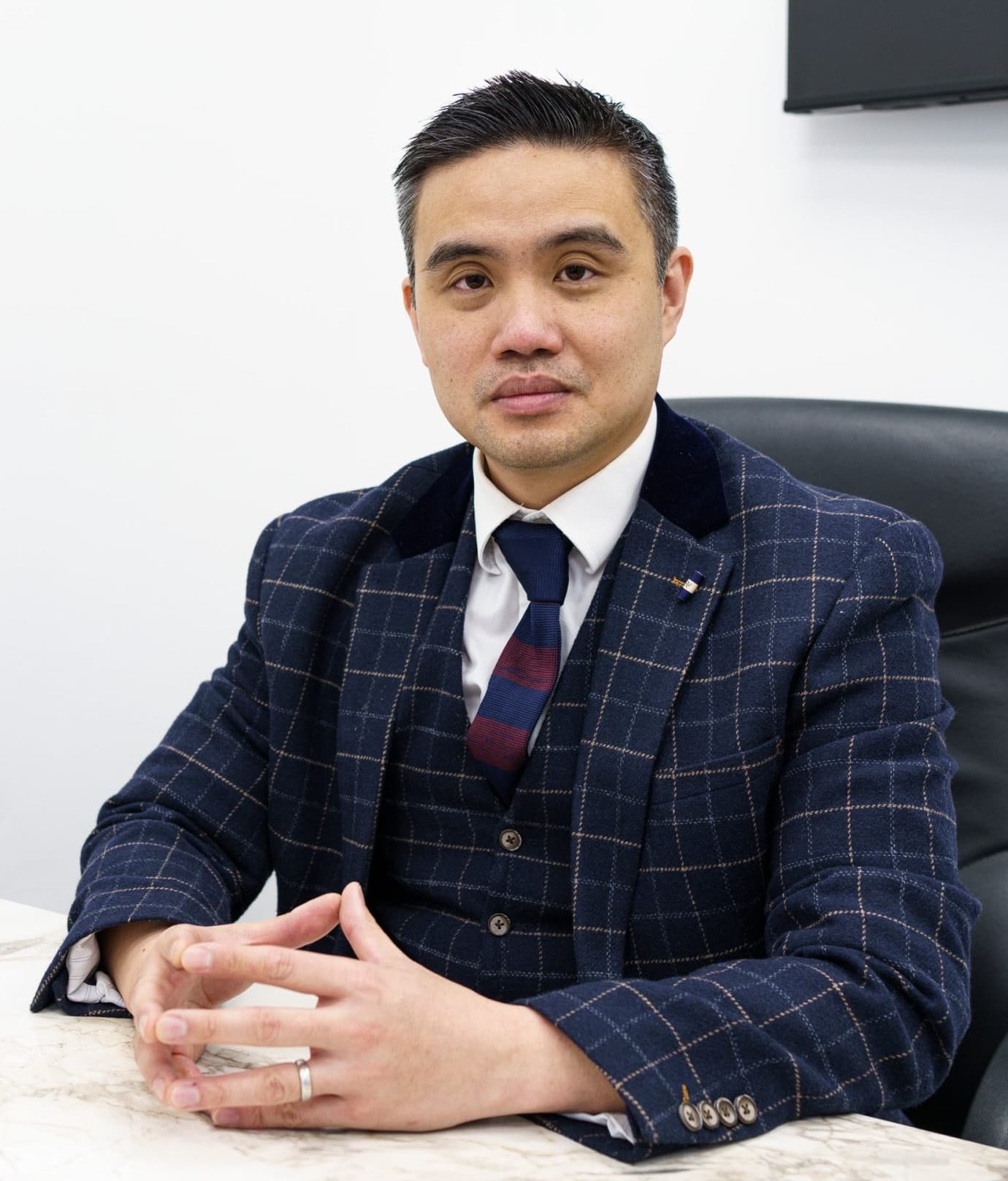 Reviewed byProf Paul Lee MBBch, FRCS (Tr & Orth), PhDLast reviewed 1 May 2026
Professor Paul Lee is a Consultant Orthopaedic Surgeon (MBBCh, MRCS, MSc, PhD, FEBOT, FRCS Tr & Orth) who leads hip replacement at London Cartilage Clinic. He trained in the SPAIRE muscle and tendon-sparing posterior technique at the Exeter Hip Unit under Professor Timperley, who developed and published the approach.
His philosophy puts joint preservation first. Every patient is assessed for biological and joint-preserving options before hip replacement is recommended, so when replacement is offered it is because it is the right next step, not the default one.

“Replacement should be the right decision, not the default one. The technique we use, and what we try first, both matter.”
Am I Ready?
Nine short questions, around three minutes. Every outcome is an invitation to talk through your hip with Professor Lee. Your answers stay with you across visits.
Hip replacement readiness self-assessment
Completed 0/9
Age is one factor among many; younger patients often benefit from a longer look at joint-preserving options first.
Select an answer to continue
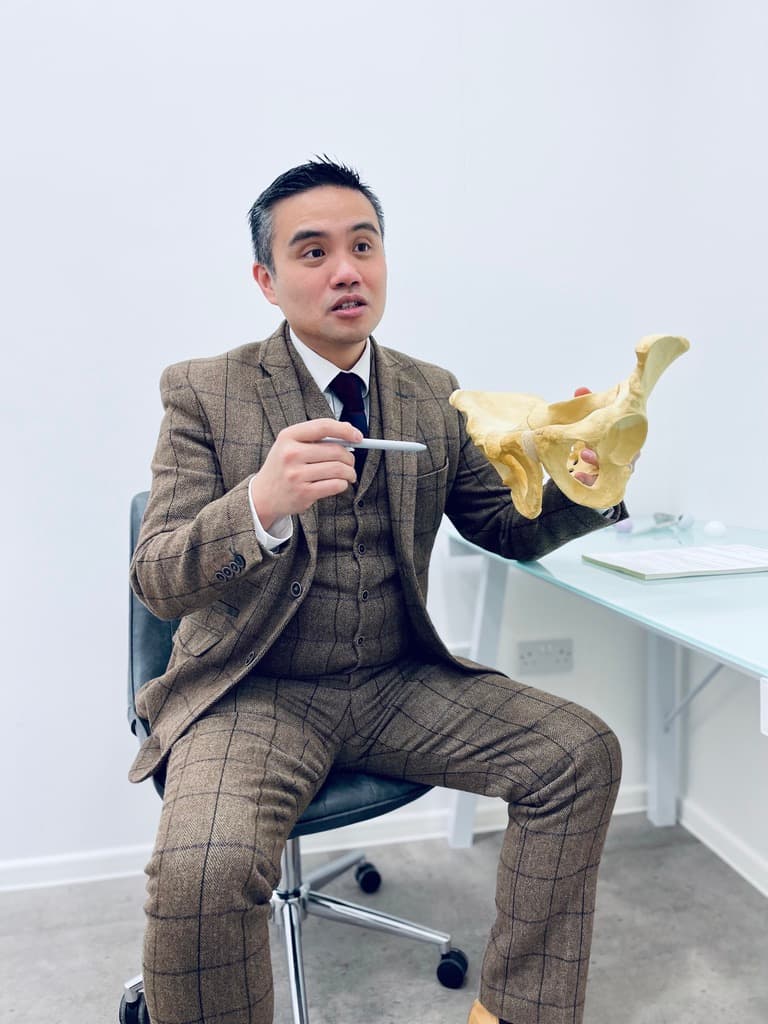
Hip replacement involves removing the damaged femoral head and lining the acetabulum with a new socket. A prosthetic stem is placed in the femur with a new ball that articulates within the socket.
Precision in implant positioning is one of the strongest predictors of long-term success. Our planning process ensures each component is placed to match your individual anatomy.
Four published outcome measures from Professor Lee’s private hip replacement practice. Each is reported as a percentage with the underlying clinical detail explained in plain English.
0%
No patients in Professor Lee’s private hip replacement practice have required a blood transfusion.
0%
Zero MRSA surgical site infections recorded in Professor Lee’s private hip replacement practice.
0%
Every scheduled hip replacement has gone ahead on the planned day, with no on-the-day cancellations.
0%
No symptomatic deep vein thrombosis events recorded after surgery in Professor Lee’s private hip replacement practice.
All four measures are zero, recorded across the full set of private hip replacements performed by Professor Lee to date. As his practice grows, these figures will continue to be reported publicly and honestly. See the full evidence summary.
From a patient
“I first thought that my hip pain is never gonna leave me, but then I found Professor Lee. And after I got my SPAIRE hip replacement done by him, I feel no more pain.”
A SPAIRE hip replacement patient
Hip replacement recovery is well-structured and predictable for most patients. The goal is early mobilisation, progressive strengthening, and a confident return to daily life and recreation.
Most patients describe hip replacement as life-changing. The aim is to eliminate the pain that limited your life and restore the mobility to enjoy it again.
For the full week-by-week breakdown, see hip replacement recovery.

Your hip replacement is performed at the 5-star Weymouth Street Hospital in central London, a private hospital with dedicated orthopaedic theatres, single en-suite patient rooms and a specialist clinical team focused on orthopaedic recovery.
Your consultation, surgical planning and pre-operative assessment are carried out at London Cartilage Clinic on Harley Street, with the operation itself a short distance away at Weymouth Street. See private hip replacement in London for the full London-focused walkthrough.

Imaging review, surgical templating and medical optimisation with Professor Lee on Harley Street.
Single en-suite room, dedicated orthopaedic theatre and a specialist surgical team.
Dedicated nursing care, pain management overseen by the surgical team, and a full meal service.
Mobilisation with the in-hospital physiotherapist from the day of surgery wherever possible.
Walking and safety-on-stairs check, plus a written recovery plan before you leave.
Follow-up appointments arranged before you leave Weymouth Street, coordinated with your surgical team.
Ongoing post-discharge physiotherapy is arranged through your own provider or coordinated by the clinic. The full breakdown of cost is on the hip replacement cost page.
A full breakdown of what is included in hip replacement at London Cartilage Clinic is on the dedicated cost page, with payment options, finance via our funding partner kandoo, and consultation fee details.
You may have more options than you think
At London Cartilage Clinic we follow a structured clinical framework across four areas of treatment. Before recommending a single procedure, we assess which combination of approaches gives you the best outcome.
Protect what you have. Slow degeneration and manage symptoms.
Fix specific damage. Torn tissue, unstable joints, structural problems.
Rebuild lost tissue. Biological treatments that stimulate new growth.
When other options are exhausted. Joint replacement as a last resort.
Explore the full range of treatments available for your joint. Each hub page shows every option we offer, organised by clinical approach.
Nine questions, around three minutes. A shared decision-making tool to frame a conversation with Professor Lee.
Read moreHarley Street consultations with surgery a short walk away at the 5-star Weymouth Street Hospital.
Read moreThe 0% safety record, SPAIRE technique citation and long-term implant survival data, reported plainly.
Read moreWhat to expect from the overnight stay through to long-term strength gains in the first year.
Read moreJoint-preserving and biological options first, with hip replacement as the right next step when it is the right next step.
Read more
Yes. Professor Paul Lee leads hip replacement at London Cartilage Clinic. Your consultation, surgical planning and the operation itself are all carried out by Professor Lee personally, not delegated.
Often, yes. Hip replacement is a well-proven procedure, but it is a major operation with a finite implant lifespan. For many patients, biological treatments such as ChondroFiller, stem-cell hip therapy, mFat, PRP or hyaluronic acid injections can provide meaningful relief and delay or prevent the need for surgery. See the hip arthritis page for the full set of options. We assess every patient for biological and joint-preserving options before recommending replacement.
The anterior approach accesses the hip from the front, working between muscles. The traditional posterior approach reaches the joint from the back and detaches the small rotator tendons, then reattaches them. The SPAIRE muscle and tendon-sparing posterior approach used by Professor Lee where clinically appropriate keeps those small rotator tendons intact, which is intended to support hip stability and earlier confident mobilisation.
SPAIRE stands for Save Piriformis And Internus, Repair Externus. It is a modern posterior approach that preserves the piriformis and obturator internus tendons at the back of the hip, instead of detaching and reattaching them. Professor Lee trained in SPAIRE at the Exeter Hip Unit under Professor Timperley, who developed the technique.
Hip replacement surgery is performed at the 5-star Weymouth Street Hospital in central London, a private hospital with dedicated orthopaedic theatres, single en-suite rooms and a specialist clinical team. Your pre-operative planning and consultations happen at London Cartilage Clinic on Harley Street.
Modern hip replacements use combinations of ceramic, metal and highly cross-linked polyethylene. Ceramic-on-ceramic and ceramic-on-polyethylene are the most common pairings. The choice depends on patient age, activity level and anatomy. Professor Lee will discuss which combination is most appropriate at consultation.
Current data shows that over 90% of modern hip replacements are still functioning well at 15 to 20 years. Advances in bearing materials and surgical technique continue to improve longevity. Younger, more active patients benefit from careful implant selection to maximise durability.
Most patients walk with a frame or crutches from the day of surgery. The walking aid is typically discarded within two to six weeks. A normal gait pattern usually returns within two to three months, though strength continues to improve for up to a year.
Hip replacement at London Cartilage Clinic is from £18,500. The full pricing breakdown, including what is included, is on our dedicated hip replacement cost page.
Still have more specific concerns?
Free Discovery CallLondon Cartilage Clinic
Clinical updates, cartilage treatment guidance, and recovery-focused articles from our specialist team.
A practical overview of cartilage repair, injection therapy, rehabilitation planning, and the clinical evidence that guides joint preservation care.
A practical overview of cartilage repair, injection therapy, rehabilitation planning, and the clinical evidence that guides joint preservation care.
A practical overview of cartilage repair, injection therapy, rehabilitation planning, and the clinical evidence that guides joint preservation care.