

Knee Cartilage
Demo Author One
Cartilage repair options for lasting joint health
A practical overview of cartilage repair, injection therapy, rehabilitation planning, and the clinical evidence that guides joint preservation care.
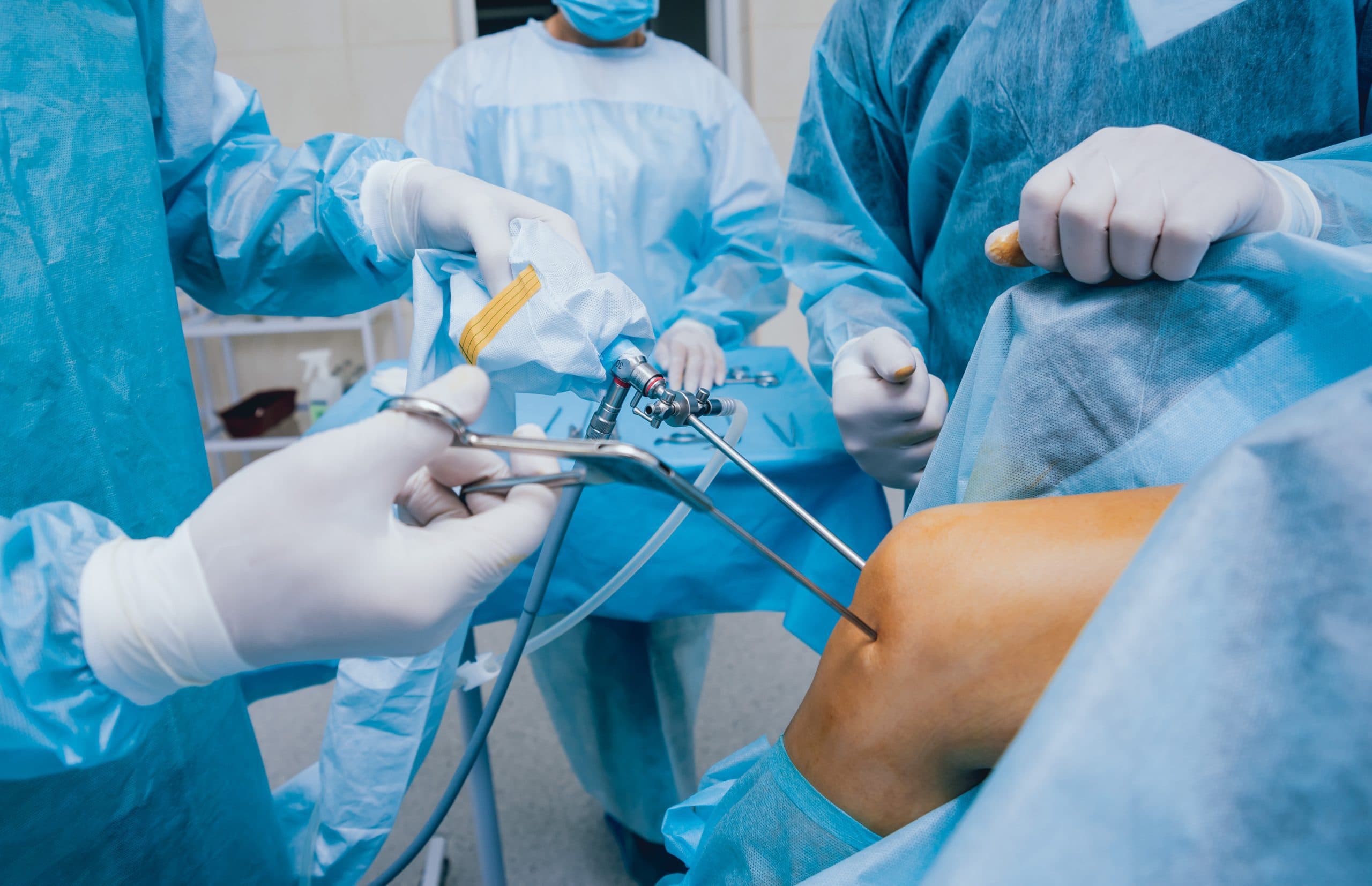
AOAT (Ankle Osteoplasty with Augmented Transplantation) is the ankle counterpart to the KOAT technique. It is designed for focal cartilage and subchondral bone defects of the talar dome or tibial plafond, where both the cartilage layer and the underlying bone need attention. By reshaping the bone first and then augmenting the surface with cartilage, AOAT creates a stable, congruent ankle surface that supports load and motion. Offered at London Cartilage Clinic for selected patients where standard cartilage repair alone would not address the underlying bone problem.
 Reviewed byProf Paul Lee MBBch, FRCS (Tr & Orth), PhDLast reviewed 1 May 2026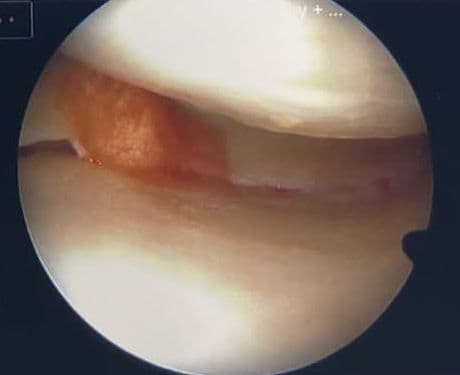
The talar dome and tibial plafond carry the entire body weight on a small surface area. If the bone beneath the cartilage is irregular, depressed, or collapsed, a cartilage graft placed on top will not match the surrounding contour and may fail under load.
AOAT is often considered after a previous ankle cartilage procedure has failed because the bone contour was not corrected at the time of the original surgery.
AOAT is performed as a single-stage operation. The bone is reshaped first, then cartilage tissue is transplanted or augmented onto the prepared surface to create a smooth, load-bearing ankle joint surface.
AOAT is a specialist procedure offered to a selected group of ankle patients. Your surgeon will determine whether this combined approach is appropriate based on imaging, defect characteristics, and prior surgical history.

You may have more options than you think
At London Cartilage Clinic we follow a structured clinical framework across four areas of treatment. Before recommending a single procedure, we assess which combination of approaches gives you the best outcome.
Protect what you have. Slow degeneration and manage symptoms.
Fix specific damage. Torn tissue, unstable joints, structural problems.
Rebuild lost tissue. Biological treatments that stimulate new growth.
When other options are exhausted. Joint replacement as a last resort.
Explore the full range of treatments available for your joint. Each hub page shows every option we offer, organised by clinical approach.
AOAT refers to Ankle Osteoplasty with Augmented Transplantation. It is the ankle equivalent of the KOAT technique used in the knee, combining bone reshaping with cartilage augmentation in a single operation.
AOAT is considered for focal cartilage and subchondral bone defects of the talar dome or tibial plafond, including osteochondral lesions of the talus, where the underlying bone contour is irregular or has collapsed and a simple cartilage graft would not sit on a stable foundation.
Standard cartilage procedures focus only on the cartilage layer. AOAT addresses the bone underneath first, reshaping it to restore normal contour, and then applies a cartilage augmentation onto that prepared surface. The combined approach is suited to defects where the bone problem caused or contributed to the cartilage failure.
Protected weight-bearing for six to ten weeks while the bone remodels and the cartilage integrates, with early range-of-motion exercises supervised by physiotherapy. Return to low-impact activity is gradual from three to four months, with sport-level loading from six to nine months depending on defect size and progress.
Still have more specific concerns?
Free Discovery CallLondon Cartilage Clinic
Clinical updates, cartilage treatment guidance, and recovery-focused articles from our specialist team.
A practical overview of cartilage repair, injection therapy, rehabilitation planning, and the clinical evidence that guides joint preservation care.
A practical overview of cartilage repair, injection therapy, rehabilitation planning, and the clinical evidence that guides joint preservation care.
A practical overview of cartilage repair, injection therapy, rehabilitation planning, and the clinical evidence that guides joint preservation care.