

Knee Cartilage
Demo Author One
Cartilage repair options for lasting joint health
A practical overview of cartilage repair, injection therapy, rehabilitation planning, and the clinical evidence that guides joint preservation care.
Guide price only. Final cost is confirmed after assessment.
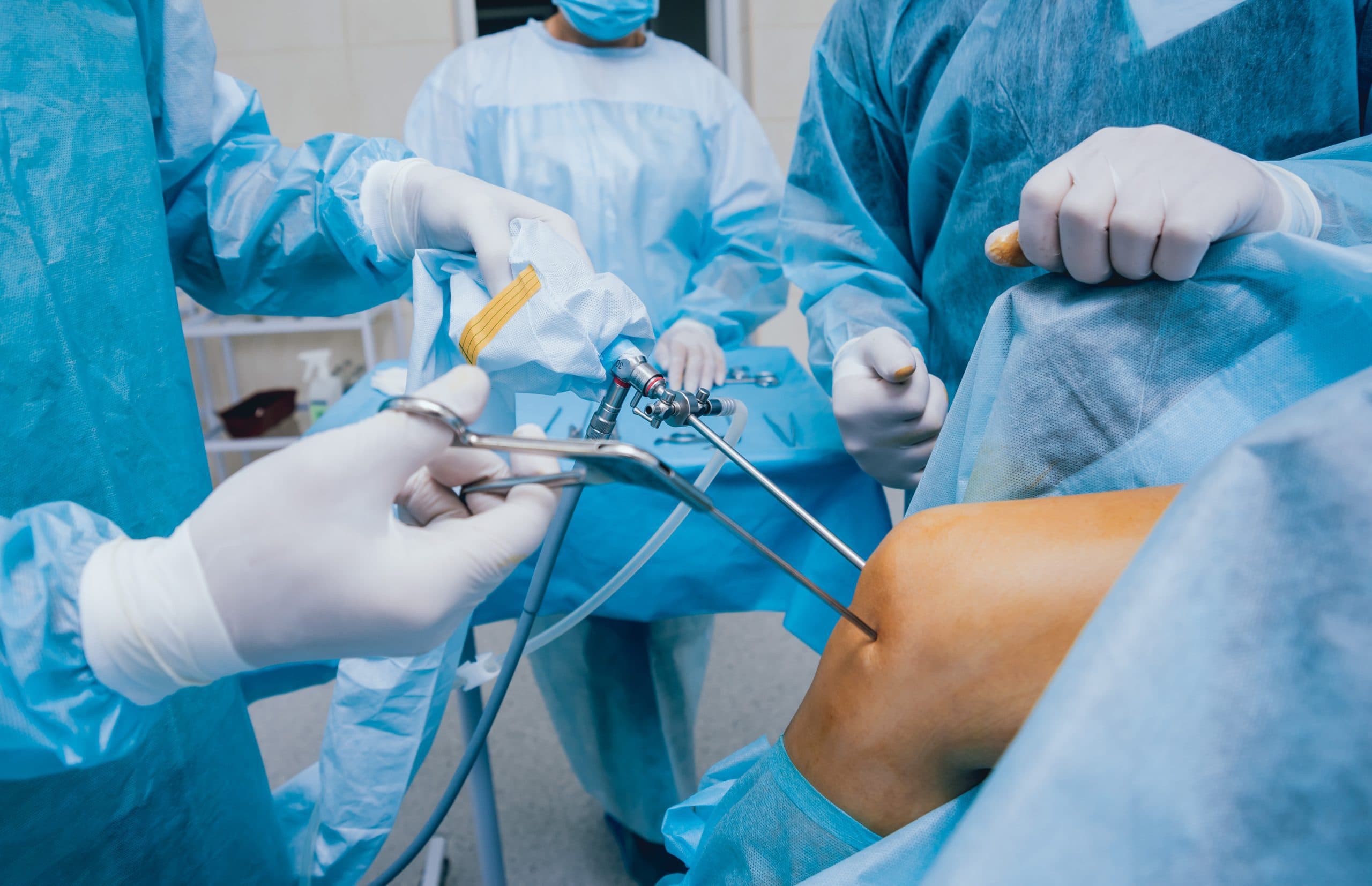
Osteochondral allograft (OCA) transplantation replaces large areas of damaged cartilage and bone with fresh donor tissue, matched to the size and location of your defect. It is a single-stage procedure suited to patients with significant cartilage loss who are too young or too active for joint replacement. At London Cartilage Clinic, we have extensive experience with allograft surgery and work with accredited tissue banks to source the highest quality donor tissue available.
 Reviewed byProf Paul Lee MBBch, FRCS (Tr & Orth), PhDLast reviewed 1 May 2026
OCA involves transplanting a precisely shaped plug of cartilage and bone from a donor into the prepared defect site in your knee. The graft is press-fitted to achieve a congruent, stable surface that matches the contour of the surrounding cartilage.
OCA is particularly valuable for younger patients facing a decision between living with a significant cartilage defect and undergoing joint replacement. It fills the gap where other cartilage procedures cannot.
Recovery after OCA transplantation is deliberate. The graft needs time to incorporate into the bone and for the cartilage surface to mature under protected conditions.
Published outcomes show that OCA provides durable pain relief and functional improvement in the majority of patients, with many grafts lasting ten years or more.

You may have more options than you think
At London Cartilage Clinic we follow a structured clinical framework across four areas of treatment. Before recommending a single procedure, we assess which combination of approaches gives you the best outcome.
Protect what you have. Slow degeneration and manage symptoms.
Fix specific damage. Torn tissue, unstable joints, structural problems.
Rebuild lost tissue. Biological treatments that stimulate new growth.
When other options are exhausted. Joint replacement as a last resort.
Explore the full range of treatments available for your joint. Each hub page shows every option we offer, organised by clinical approach.

An osteochondral allograft is a section of cartilage and underlying bone harvested from a tissue donor. It is size-matched to the defect in your joint and transplanted in a single surgical procedure. The graft provides living cartilage cells on a structural bone scaffold, allowing it to integrate with your own tissue over time.
Donor tissue is sourced through accredited tissue banks that screen extensively for infectious disease and tissue quality. Fresh allografts are stored and transported under strict protocols to preserve cell viability. The safety profile is well established with decades of clinical use.
OCA is typically recommended for patients with large focal cartilage defects, often greater than two square centimetres, who are too young or active for joint replacement. It is also an option for patients who have had a previous cartilage procedure that has not succeeded.
OATS uses your own cartilage plugs from a non-weight-bearing area, which limits the amount of tissue available. OCA uses donor tissue, which allows much larger defects to be treated in a single stage without a secondary donor site on your own knee.
Weight-bearing is restricted for six to eight weeks to protect the graft while it integrates. Physiotherapy begins early to maintain range of motion. Return to low-impact activity is typically possible from four to six months, with higher-impact sport from nine to twelve months.
Still have more specific concerns?
Free Discovery CallLondon Cartilage Clinic
Clinical updates, cartilage treatment guidance, and recovery-focused articles from our specialist team.
A practical overview of cartilage repair, injection therapy, rehabilitation planning, and the clinical evidence that guides joint preservation care.
A practical overview of cartilage repair, injection therapy, rehabilitation planning, and the clinical evidence that guides joint preservation care.
A practical overview of cartilage repair, injection therapy, rehabilitation planning, and the clinical evidence that guides joint preservation care.