

Knee Cartilage
Demo Author One
Cartilage repair options for lasting joint health
A practical overview of cartilage repair, injection therapy, rehabilitation planning, and the clinical evidence that guides joint preservation care.

Wrist arthritis causes pain, stiffness, and weakness that limits gripping, lifting, and daily hand function. Most wrist arthritis follows a previous injury, and treatment options range from biological therapy to surgical reconstruction.
 Reviewed byProf Paul Lee MBBch, FRCS (Tr & Orth), PhDLast reviewed 1 May 2026
The wrist is made up of eight carpal bones with multiple articulations. Arthritis tends to follow predictable patterns based on the original injury.
The stage and pattern of arthritis determines which treatments and surgical options are most appropriate.
Our priority is preserving wrist movement for as long as possible. Every degree of motion maintained translates to better daily function. We exhaust biological and conservative options before recommending surgery.
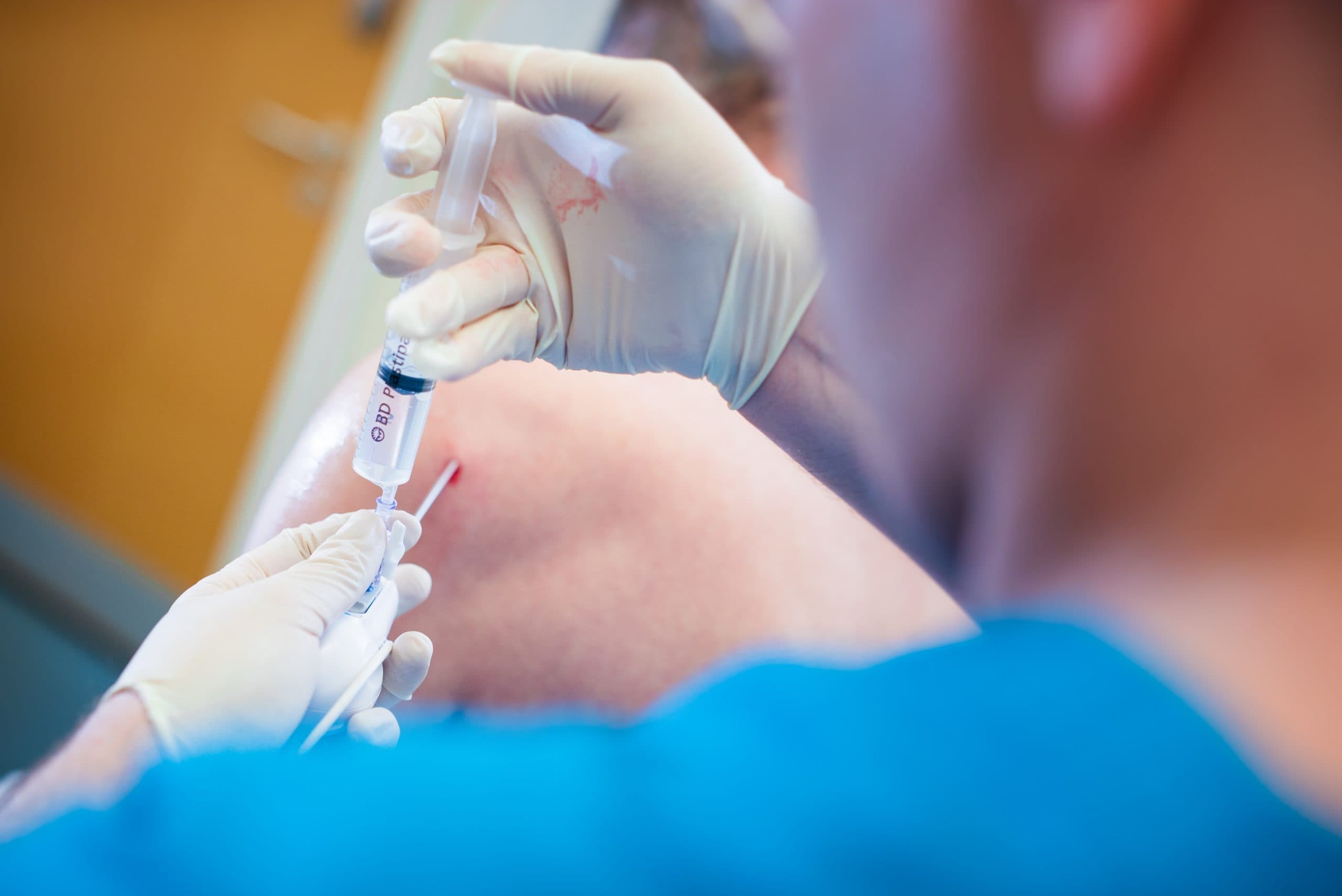
You may have more options than you think
At London Cartilage Clinic we follow a structured clinical framework across four areas of treatment. Before recommending a single procedure, we assess which combination of approaches gives you the best outcome.
Protect what you have. Slow degeneration and manage symptoms.
Fix specific damage. Torn tissue, unstable joints, structural problems.
Rebuild lost tissue. Biological treatments that stimulate new growth.
When other options are exhausted. Joint replacement as a last resort.
Explore the full range of treatments available for your joint. Each hub page shows every option we offer, organised by clinical approach.

The most common cause is post-traumatic arthritis following a previous scaphoid fracture or ligament injury (particularly scapholunate). This leads to SLAC (scapholunate advanced collapse) or SNAC (scaphoid nonunion advanced collapse) wrist patterns. Primary osteoarthritis of the wrist is less common.
Pain with gripping, twisting, or loading through the wrist. Stiffness, particularly in the morning or after rest. Reduced range of motion in flexion, extension, or both. Swelling and tenderness over the affected area of the wrist.
Yes. Splinting, activity modification, injection therapy (steroid, HA, PRP), and biological treatments such as mFat can manage symptoms and slow progression. These are particularly effective in early to moderate disease.
Options include proximal row carpectomy (removing a row of carpal bones), partial wrist fusion (fusing the affected compartment), and total wrist fusion for end-stage disease. The choice depends on which compartments are affected and your functional requirements.
Still have more specific concerns?
Free Discovery CallLondon Cartilage Clinic
Clinical updates, cartilage treatment guidance, and recovery-focused articles from our specialist team.
A practical overview of cartilage repair, injection therapy, rehabilitation planning, and the clinical evidence that guides joint preservation care.
A practical overview of cartilage repair, injection therapy, rehabilitation planning, and the clinical evidence that guides joint preservation care.
A practical overview of cartilage repair, injection therapy, rehabilitation planning, and the clinical evidence that guides joint preservation care.