

Knee Cartilage
Demo Author One
Cartilage repair options for lasting joint health
A practical overview of cartilage repair, injection therapy, rehabilitation planning, and the clinical evidence that guides joint preservation care.

mFat therapy, a cutting-edge approach in regenerative medicine, utilizes Microfragmented Adipose Tissue (MFAT) to treat various joint disorders, including osteoarthritis. At London Cartilage Clinic, we harness the healing capabilities of adipose-derived Stem Cell / Medicinal Signaling Cells to offer a natural, effective solution for joint pain relief and tissue regeneration.
 Reviewed byProf Paul Lee MBBch, FRCS (Tr & Orth), PhDLast reviewed 1 May 2026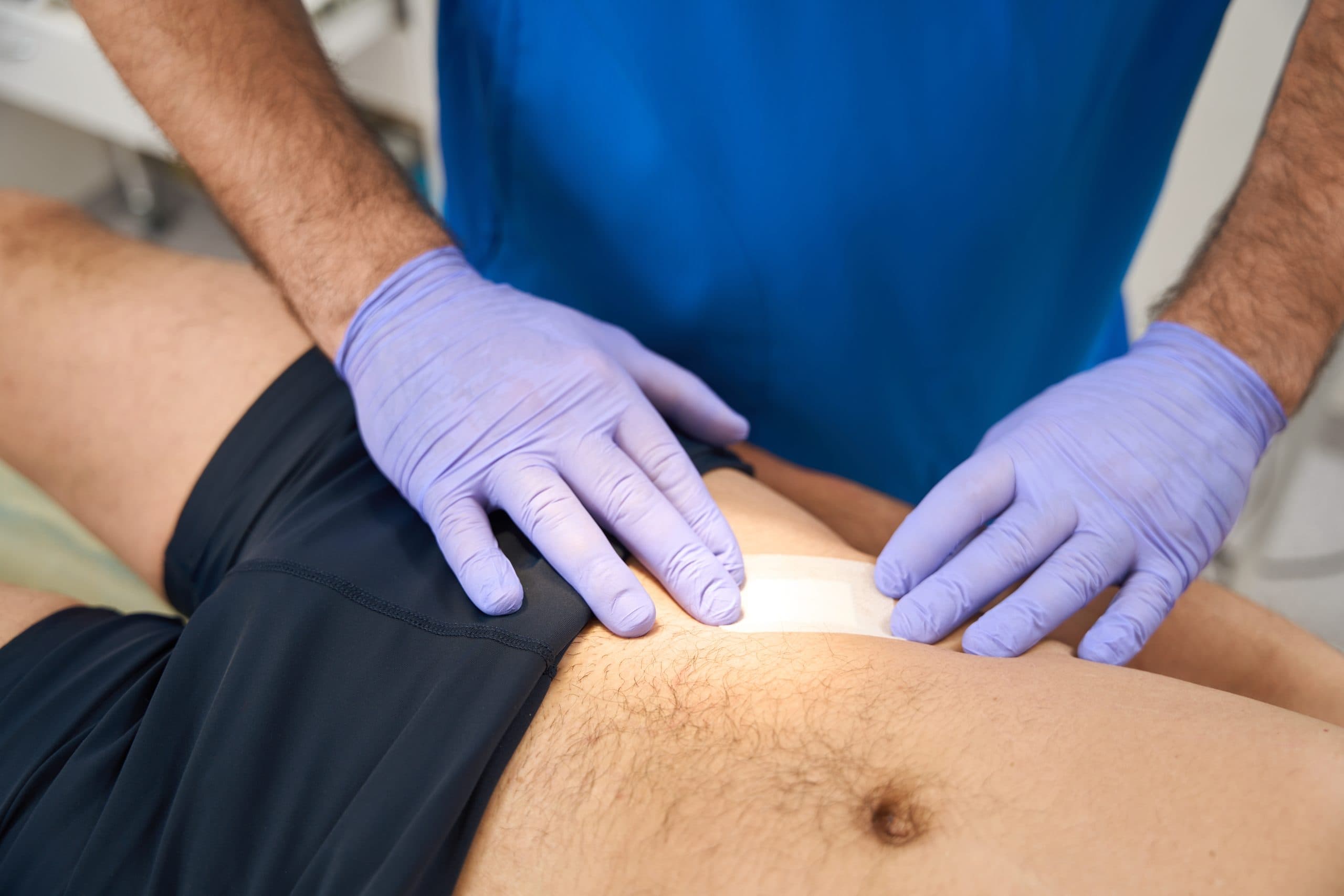
mFat therapy uses your own adipose tissue to deliver a concentrated regenerative matrix containing signalling cells and bioactive factors.
The aim is to improve pain and function by enhancing the local healing environment, not simply masking symptoms.
Treatment is minimally invasive and usually completed in a single outpatient session.
Many patients return to routine activity quickly, with improvement in pain and function typically developing over the following weeks.
At London Cartilage Clinic, mFat can be integrated with other evidence-based therapies when this supports a stronger overall treatment plan.

You may have more options than you think
At London Cartilage Clinic we follow a structured clinical framework across four areas of treatment. Before recommending a single procedure, we assess which combination of approaches gives you the best outcome.
Protect what you have. Slow degeneration and manage symptoms.
Fix specific damage. Torn tissue, unstable joints, structural problems.
Rebuild lost tissue. Biological treatments that stimulate new growth.
When other options are exhausted. Joint replacement as a last resort.
This treatment can be applied across multiple joints. Select yours to see the full range of options we offer, organised by clinical approach.
Explore All Treatment Options
mFat therapy is suitable for individuals with joint pain, arthritis, and injuries in various joints, offering an alternative to more invasive surgical procedures.
Post-procedure, patients may experience moderate pain and swelling, manageable with rest and painkillers. Normal activities can usually be resumed within 1 to 2 weeks, with improvements visible from two to eight weeks.
While mFat therapy is a promising option, alternatives range from other minimally invasive procedures to surgical interventions like knee or hip replacement. The best treatment should be determined with a specialist orthopaedic surgeon.
This treatment gets its name from micorfragmented adipose tissue, which owes to the fact that the injection uses fat (adipose) from the patient’s own body.
If you are unsure whether an mFat injection is right for you, scheduling a consultation with a medical professional will lead to targeted advice. Here, the specialist will consider factors such as your age, health, and medical history to decide if you’re suitable. Although the mFat injection has very little risk associated with it.
No. Adipose tissue therapy and injections can be used to treat pain and inflammation in knee, hip, and shoulder joints. Furthermore, mFat can be used to treat damage to ligaments, tendons, muscles, and cartilage resulting from osteoarthritis.
Still have more specific concerns?
Free Discovery CallLondon Cartilage Clinic
Clinical updates, cartilage treatment guidance, and recovery-focused articles from our specialist team.
A practical overview of cartilage repair, injection therapy, rehabilitation planning, and the clinical evidence that guides joint preservation care.
A practical overview of cartilage repair, injection therapy, rehabilitation planning, and the clinical evidence that guides joint preservation care.
A practical overview of cartilage repair, injection therapy, rehabilitation planning, and the clinical evidence that guides joint preservation care.