

Knee Cartilage
Demo Author One
Cartilage repair options for lasting joint health
A practical overview of cartilage repair, injection therapy, rehabilitation planning, and the clinical evidence that guides joint preservation care.
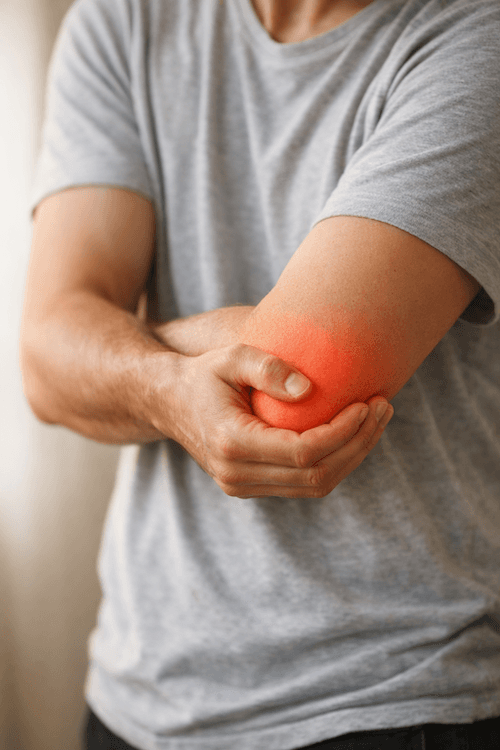
Elbow arthritis causes progressive stiffness, pain, and loss of movement that affects daily tasks from eating to dressing. It is most commonly caused by previous injury and has fewer surgical options than larger joints, making early management important.
 Reviewed byProf Paul Lee MBBch, FRCS (Tr & Orth), PhDLast reviewed 1 May 2026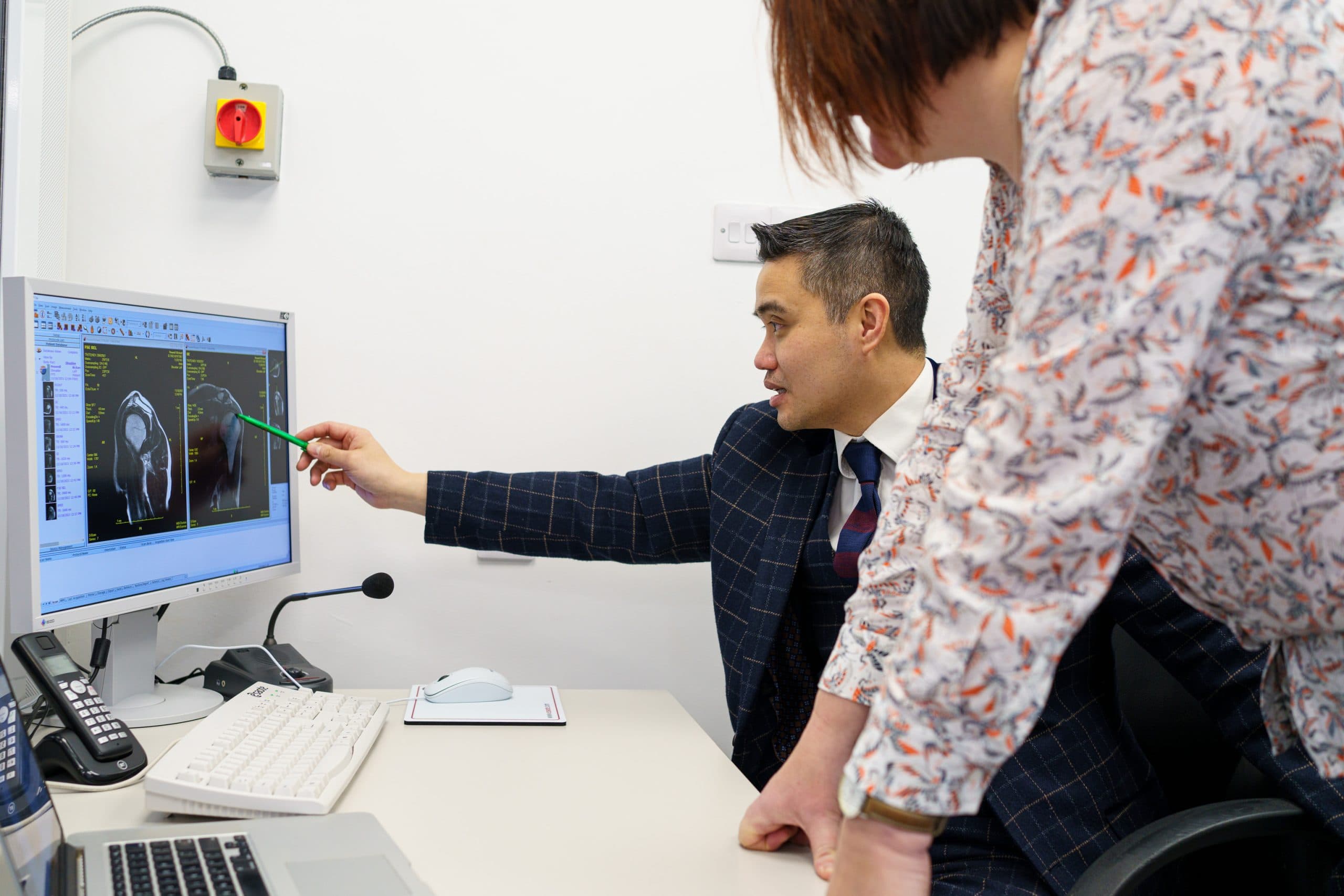
The elbow has three articulating surfaces that must work in coordination for bending, straightening, and forearm rotation. Arthritis disrupts this precision.
Because the elbow has limited reconstruction options compared to larger joints, preserving what remains is the priority. Our treatment approach reflects this.

You may have more options than you think
At London Cartilage Clinic we follow a structured clinical framework across four areas of treatment. Before recommending a single procedure, we assess which combination of approaches gives you the best outcome.
Protect what you have. Slow degeneration and manage symptoms.
Fix specific damage. Torn tissue, unstable joints, structural problems.
Rebuild lost tissue. Biological treatments that stimulate new growth.
When other options are exhausted. Joint replacement as a last resort.
Explore the full range of treatments available for your joint. Each hub page shows every option we offer, organised by clinical approach.
The most common cause is post-traumatic arthritis following a previous fracture, dislocation, or ligament injury. Primary osteoarthritis of the elbow is less common but can occur in patients who have performed heavy manual labour or overhead sport over many years.
Stiffness is often the earliest symptom, with difficulty fully straightening or bending the elbow. Pain develops with use, and patients may notice grinding, catching, or locking if loose bodies are present in the joint.
Yes. Many patients manage well with physiotherapy, activity modification, and injection therapy. Biological treatments such as PRP and mFat can support the remaining cartilage. Surgery is reserved for cases with significant mechanical symptoms or functional limitation.
Arthroscopic debridement can remove loose bodies, bone spurs, and inflamed tissue to improve movement and reduce catching. In severe cases, elbow replacement may be considered, though it is less common than knee or hip replacement and has specific activity restrictions.
Still have more specific concerns?
Free Discovery CallLondon Cartilage Clinic
Clinical updates, cartilage treatment guidance, and recovery-focused articles from our specialist team.
A practical overview of cartilage repair, injection therapy, rehabilitation planning, and the clinical evidence that guides joint preservation care.
A practical overview of cartilage repair, injection therapy, rehabilitation planning, and the clinical evidence that guides joint preservation care.
A practical overview of cartilage repair, injection therapy, rehabilitation planning, and the clinical evidence that guides joint preservation care.